SPINNING RAW WOOL.
THE FREE
~BEAR AND WOLF ~
INFO PAGE ABOUT SPINNING WOOL IN THE GREASE.
LONG DRAW.
THE WAYS TESTED.
THE BREEDS TESTED.
WHEN I FIRST SPUN RAW WOOL I USED THE SHORT DRAW METHOD AND EVEN THOUGH I REALLY LIKE WORKING WITH RAW WOOL, THIS WAY OF SPINNING IT PROVED NOT TO BE MY FAVOURITE. IT FELT AS IF THE LANOLIN SLOWED DOWN HOW THE FIBRES SHAPED INTO YARN AND TO ME THE SHORT DRAW FELT KINDA TOO SHORT, EVEN FOR THE STAPLE LENGHT OF A TEXEL.
WHEN I SWITCHED TO SPINNING THE RAW WOOL LONG DRAW, IT SURPRISED ME HOW THE LANOLIN HELPED INSTEAD OF HINDERED THE SPINNING ANDTHE SINGLES SPUN EVENLY.
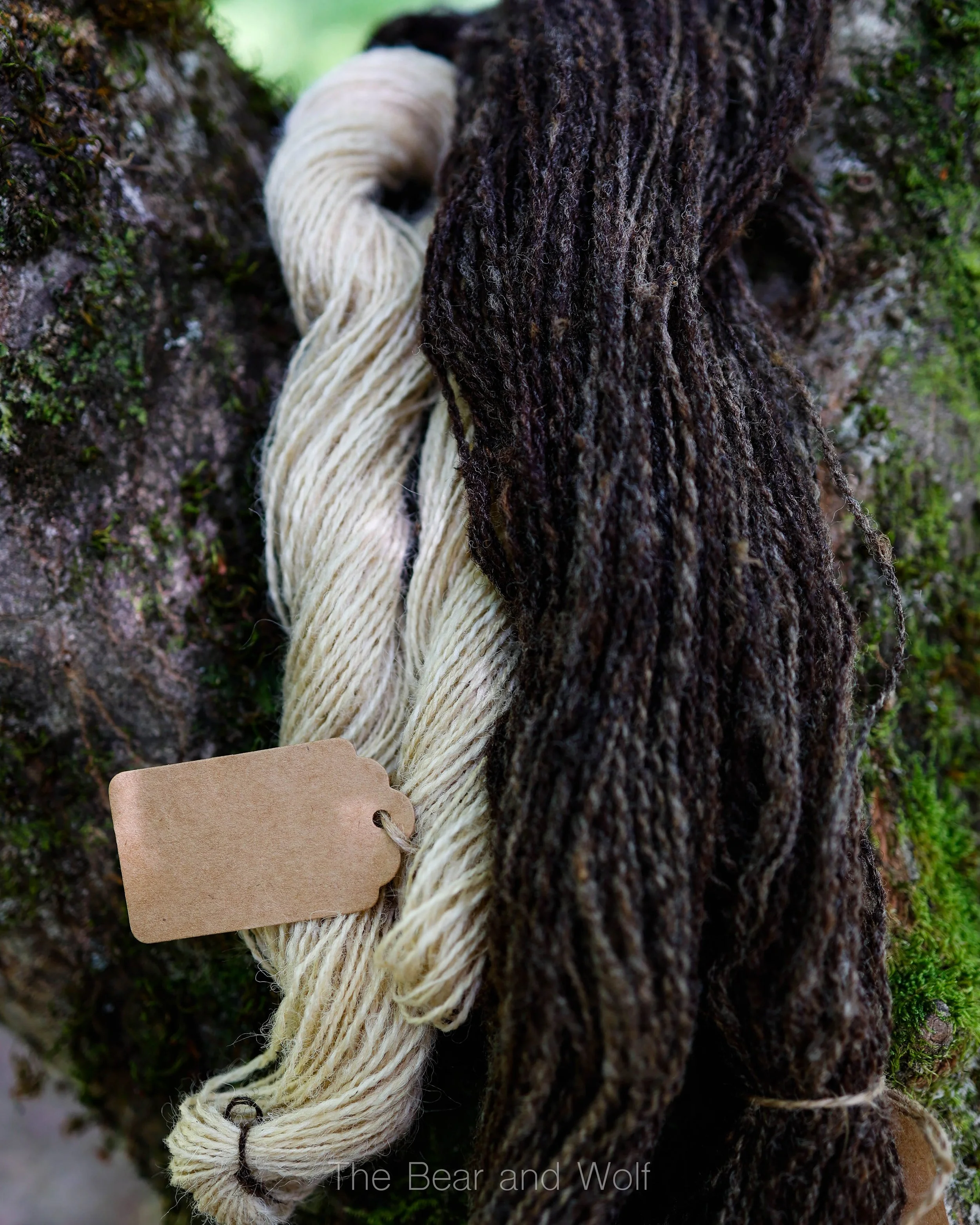
WORKING WITH THE UNPROCESSED, UNWASHED AND UN-CARED WOOL GIVES A VERY DIFFERENT YARN THAN WHEN YOU WORK WITH A PREPARED AND COMBED WOOL. IN THE YARN YOU SEE THE DIFFERENT COLOUR VARIATIONS OF THE FLEECE ITSELF AND WHEN YOU PLY THE YARN IT IS MORE HEATHERY BY NATURE.
As wool- spinners and felters and weavers and knitters know, not all fleeces or all parts of a single fleece are created equal. for this project I spun and tested different A-grade raw wool fleeces, which means there was a minimum of plant matter and nebbs and they were also freshly shorn or shorn this year so the lanolin was still soft, and that makes spinning life a bit easier.* That said, I had some fleeces that were so ‘crimpy’ they really needed to be washed beforehand as spinning them raw ‘trapped’ the soil particles in the yarn.
So, every breed of sheep and then every flock within a breed, every sheep within a flock and the different parts of a single sheep produces a different fibre and not all of the fibres are easy to spin evenly long draw. when you do this more often you will get to know your likes and dislikes or like me you will get to know which kind of fleeces to stay away from for this way of spinning.
And as to prove that last bit, I will mention some favourites so far and also mention below the fleeces I tested that did not work easily, or did not give me the good straight or stable yarn I am after and I saw how they, for me, would benefit more from combing or washing and carding before a spin.
* If you have an older raw fleece, just make sure you work in a warm area so the lanolin is less sticky or crumbly.
There are different ways to spin wool in the grease and I first used to card the raw wool before spinning and then spun it short draw.
This year I started exploring spinning raw wool long draw and ended up with 3 ways that work best for me and a lot of the fleeces I tested. It taught me a lot about the different fleeces and yarns and fibres and this page is made for you, an unscientific personal and collective experience page for if you’d like to explore these ways with me.
I posted some short reels on my Instagram page so check those out if you need images instead of words.
THE 3 METHODS USED.
THAT FIRST WAY, Grab a small handful of the fleece and spread it out and carefully remove any VM or 2nd cuts. The stash in your hands should be held loose. Then just spin a long draw yarn as you are used to. If you are not used to long draw spinning I can tell you that the lanolin is actually helpful in the process of mastering a long draw spin, the grease helps stick the fibres together. Just practise for a while.
WHEN YOU FLUFF UP THAT HANDFUL OF FLEECE THE FIBRES ARE SPREAD IN ALL DIRECTIONS AND (DEPENDING ON THE FLEECE), AFTER WASHING YOU WILL HAVE A SOFT BOUNCY WOOLLEN YARN.THIS METHOD WORKS BEST IF YOU HAVE A FLEECE WITH NOT TOO SHORT FIBRES AND WITH A NICE AMOUNT OF CRIMP.
THE SECOND WAY Is particularly amazing when you are spinning quite long locks with perhaps a higher micron count, (thickness of the fibre.) With this method you spin every lock separately.
You grab one lock and smooth out the fibres but keep the shape of the lock intact. you only smooth it so it is straight and then you spin every lock from either only the tips or the cut ends. I find it easier to start with the cut ends of the locks each time. If you start at the tip you will notice at one point that all the fibres go willy nilly, but this will sort itself out so don’t worry, the majority of the fibres in your finished yarn will lay in one smooth direction.
THIS WILL GIVE YOU A VERY STRONG AND NOT SO BOUNCY BUT STRAIGHT YARN. AND AGAIN THIS DEPENDS ON THE BREED, BUT I NOTICED THIS YARN HAS A PARTICULAR SHINE.
AND THEN THERE IS THE THIRD WAY IN WHICH YOU TAKE ALL AND EVERY STEP OUT OF THE PREPARATION. Not only you do not wash or card the wool but you also do not spread or smooth out the wool. This will give you are yarn with as much of the colour variations visible as they are in the fleece. Some fleeces will give a gentle woolly movement in the yarn especially with the more crimpy fleeces with definite locks and tips. The soft lanolin helps when you want to spin a specifically thin yarn like cobweb or a fingering weight for finishing a weaving or embroidery. When the fleece is very dirty or compacted it is better to use the first method though. ,
THIS ONE IS TO ME THE MOST AMAZING AND MADE ME QUESTION SO MANY THINGS I WAS TAUGHT OR THOUGHT ABOUT SPINNING WOOL AND THE HISTORY OF SPINNING, HOW OUR ANCESTORS PROCESSED WOOL.
THE YARN BECOMES UNEXPECTEDLY EVEN, THE COLOURS ARE MORE VARIEGATED, BUT IT IS THE SPINNING PROCESS ITSELF WHICH SURPRISED ME MOST. THE NATURAL EASE.
It is the easiest method to explain but perhaps not the easiest to spin if you have not done it before, Just because you might feel uncontrollably tempted to at least arrange or tweak those fibres in your hand before you start. Just don’t. let it go and let the wool decide.
MAKE YOURSELF A CUP OF TEA, RELAX AND ENJOY THE PROCESS.
So. You have your fleece and gently grab a small handful of wool, do not tear the fleece apart, be gentle. Leave that small handful as is, do not spread it out or change its shape, just tease some fibres away to attach to your leader and start spinning long draw. the fibres will find their way. Best go slow at first.
EVERY TIME DURING SPINNING THIS WAY, I SAW HOW THE FIBRES IN THE DRAFTING TRIANGLE JUST FOUND THEIR WAY NATURALLY. THE INEVITABLE PLANT BITS OR BUGS AND EVEN THE BRITTLE TIPS WERE OFTEN JUST PUSHED OUT OF THE YARN OR LAID ON TOP OF IT WITH THE HELP OF THE LANOLIN AND THOSE BITS THEN FELL OFF DURING SPINNING OR LATER DURING PLYING.
YEAH..THESE ARE MY FAVOURITE SPINS.
The yarn of course changes a lot when you wash or set it after spinning. It fluffs up and shows you the character of the fibres and the woolly feel of a long draw. Do consider however the choice you have about if you want to remove all of the lanolin or not.
If I wash the yarn I place the skeined up yearn in a large bowl with fairly warm water for a first rinse, then I get clean water of the same temperature with a bit of soap and put the skein in and let it rest for up to 15 minutes after which I rinse it twice, also with warm water. If the lanolin is very sticky I just repeat.
I TESTED SEVERAL FLEECES FOR A SMALL SORT and PRETTY UNSCIENTIFIC ;) BUT HANDS-ON EXPERIENCE- DATA BASE FOR YOU.
AS THERE ARE MANY BREEDS OF SHEEP I NOW ASKED OTHER SPINNERS TO COME SIT AROUND THE FIRE WITH ME AND DO SOME RAW WOOL TESTING SO THIS PAGE MIGHT GROW STILL. LOGICALLY THOUGH, DIFFERENT FLEECES CAN SPIN SOMEWHAT IN THE SAME WAYS SO JUST GO AND TEST YOUR LOCAL WOOL FOR YOURSELF.
HAPPY SPINNING.
BADGERFACE.
THE BADGERFACE IS ONE OF MY FAVOURITE FLEECES TO WORK WITH, EITHER AS A CLEAN BATT OR AS A RAW FLEECE, BOTH IN SPINNING AND WEAVING, SO LOGICALLY I TESTED IT FOR THIS PAGE.
I SPUN TWO TEST SKEINS IN THE FIRST AND THIRD METHOD. BOTH WAYS OF SPINNING GAVE ME A SOFT AND BOUNCY YARN. THE 3RD WAY TO ME THOUGH FELT THE NICEST. THE YARN IS EVEN AND SOFT AND WITH A GOOD COLOUR VARIATION.
SOME PARTS OF THE FLEECE, CLOSER TO THE BELLY WERE TOO SHORT FOR A LONG DRAW SO I KEPT THOSE PARTS TO CARD LATER ON.
DRENTS HEIDE.
ANOTHER OF MY FAVOURITE MOST BEAUTIFUL BREEDS TO WORK WITH. THE FLEECE HAS THREE DIFFERENT KINDS OF FIBRES. IT IS RUGGED AND HONEST AND BEAUTIFUL IN ITS COLOURS.
I EFFORTLESSLY SPUN LACE WIEGHT YARN WITH THIS WOOL AND TESTED ALL 3 OF THE METHODS I WROTE ABOUT, AND THINK THAT IF YOU WANT TO SPIN ALL COATS TOGETHER I WOULD GO FOR METHOD 1.
DRENTS HEIDE LAMBSWOOL.
THIS HAS ALL THE GOODNESS OF A DRENTS HEIDE SHEEP WITHOUT THE COURSER FEEL. AGAIN I EFFORTLESSLY SPUN LACE WIEGHT YARN WITH THIS WOOL AND TESTED ALL 3 OF THE METHODS , SPINNING THE LOCKS (METHOD 2) WAS REALLY NICE FOR A STRONG BUT NOT HARSH YARN.
ROMNEY (GREY)
THIS WOOL IS BEAUTIFUL WITH ENOUGH CRIMP AND A LOT OF COLOUR VARIATIONS WITH DARKER SHORTER FIBRES NEARER TO ITS BELLY. IT IS SOFT ENOUGH FOR WRAPS AND SCARVES.
WHEN I BEGAN TESTING THIS FLEECE I USED THE FIRST METHOD AND SPREAD OUT THE FIBRES BEFORE SPINNING AND THIS KIND OF WOOL IS VERY SUITABLE TO SPIN ULTRA THIN YARN. FOR THE MAIN BULK OF THIS FLEECE I USED THE 3RD METHOD TO GET THAT COLOUR VARIATION VISIBLE AND SPUN FROM A FINGERING TO A DK TO SPORT WEIGHT YARN.
THE MICRON COUNT IS NORMALLY 29-35
BLEU DU MAINE
SO, IN THIS SECTION I WILL MENTION THE FLEECES I PERSONALLY COULD NOT MAKE WORK SPINNING IT IN THE GREASE LONG DRAW OR FOUND THE YARN NOT SO NICE AND USEABLE WHEN YOU SPIN THE UNPROCESSED WOOL .
BLEU DE MAINE IS A GORGEOUSLY SOFT WOOL WITH A LOT OF CRIMP. THIS PARTICULAR FLEECE I SPUN HAD A LOT OF SOIL PARTICLES GATHERED IN THE CUT ENDS OF THE SMALL LOCKS WHICH RESULTED IN A YARN WITH VISIBLE SOIL PARTICLES.
IF YOU HAVE ANY EXPERIENCE SPINNING THIS WOOL IN THE GREASE DO LET ME KNOW.!
ZWARTBLES WITH THIS FLEECE I HAD TO LET GO OF MY IDEA OF A STRAIGHT YARN, THE FIBRES OF THIS FLEECE WERE QUITE SHORT AND THE TIPS OF THE LOCKS FIRMLY MATTED TOGETHER DUE TO THE WEATHER AND SUN, IT IS A LOVELY SOFT WOOL THOUGH.
I SPUN IT BOTH IN THE 1ST METHOD AND THE 3RD AND DUE TO THE SHORT FIBRES AND MATTED LOCKS THERE WAS NOT A SHOCKING DIFFERENCE BETWEEN THEM. IN THE END I HAD A YARN THAT RESEMBLED MORE AN ART YARN WITH THE LIGHTER TIPS POKING OUT AND IS REALLY NICE TO IN A WEAVING WHERE IT GIVES MOVEMENT AND JOY.
BLACK HEBRIDEAN
SO THIS ONE WAS HARDER TO SPIN RAW AND UNCOMBED. I THINK THE HARDEST SO FAR. THE FLEECE WAS QUITE COMPACTED AND IT WAS JUST A VERY SLOW SPIN. I USED BOTH THE 2ND METHOD WHERE I SPIN PURELY FROM THE LOCKS AND IT SURPRISED ME HOW THE YARN BECAME STABLE AND STRONGER THAN I EXPECTED, IT IS NOT A YARN I HAVE A LOT OF USE FOR THOUGH.
THE 1ST METHOD THOUGH WORKED BETTER WHEN I COULD TEAR THE LOCKS APART AND SPREAD OUT THE FIBRES CAREFULLY.
FINN ULL
THIS IS A WOOL VERY HIGH IN LANOLIN. DARK IN COLOUR AND WITH A SHORTER FIBRE, IT HAS A SOFT FEEL AND GOOD CRIMP AND DUE TO ITS COLOUR YOU CAN HARDLY SEE THE SOIL PARTICLES YOU WOULD PROBABLY CLEARLY SEE IN A LIGHTER FLEECE WITH THE SAME KIND OF FIBRE.
THE YARN WAS FAR MORE BUMPY THAN WITH FLEECES WITH A LONGER STAPLE LENGTH BUT THE COLOUR VARIATION WAS GENTLE AND BEAUTIFUL.
KÄRTNER BRILSCHAAP. THIS FLEECE HAS A LONG WHITE STAPLE, LONG LOCKS AND WITH LONG STRAIGHT COURSER LOCKS WITH QUITE A CRIMPY BEGINNING.
THIS WOOL GAVE ME A STRONG STRAIGHT YARN BUT WITH A MORE WOOLLY BOUNCE DESPITE THE HIGH MICRON COUNT. WITH SUCH LONG LOCKS. I PREDOMINANTLY SPUN THIS WOOL WITH THE 2ND METHOD BUT THE OTHER ONES WORKED ALSO REALLY.
HEIDE SCHNUKKE. THIS FLEECE IS DUAL COATED AND COMES IN MANY COLOUR VARIATIONS WITH ITS LONG OUTER COAT. IT IS A STUNNINGLY BEAUTIFUL ANIMAL. WHO DOES NOT GIVE WOOL SUITABLE TO SPIN AS A WHOLE WHEN YOU WANT TO WEAR A GARMENT ON YOUR SKIN THOUGH, BE AWARE OF A PRICKLY OUTER COAT.
THE UNDERCOAT IS SOFTER THOUGH ANDIT IS EASY ENOUGH TO SEPARATE BY HAND. BUT I CHOOSE TO SPIN IT AS A WHOLE INTO A WORSTED WEIGHTED COURSE YARN WITH BEAUTIFUL COLOURS AND USED BOTH THE 1ST AND THE 3RD METHOD.
HÄLSINGE FÅR.
THESE SHEEP FROM HÄLSINGE ARE STRONG AND BEAUTIFUL. THEY ARE DUAL COATED AND THEIR UNDERCOAT WOOL CAN BE SOFT BUT THE WHOLE OF THE FLEECE IS NOT SUITABLE FOR ANYTHING ON THE BODY I THINK. THE COLOURS AND FEEL OF THIS SPIN WERE AMAZING THOUGH AND I WOULD VERY HAPPILY SPIN MORE. PURE JOY.
I TESTED DIFFERENT WAYS BUT FOR THE MAJORITY OF THE WOOL I CHOSE NOT TO SEPARATE THE COATS AND USED THE 1ST METHOD.
WHEN YOU ARE INTERESTED IN A PHOTOSHOOT WITH ME, AND WANT TO KNOW THE DETAILS JUST USE THE CONTACT FORM BELOW.